+2% EXTRA DISCOUNT FOR BUYING ONLINE


Autumn-Winter 2026/27 Trends: Colors and Textures That Transform the Table

14 October 2026

With the arrival of autumn, restaurants and hotels seek to create atmospheres that are warmer, more inviting, and full of character. Table décor plays a pivotal role in this transformation: colors, textures, and small details can completely alter the mood of a space.

Moreover, color is not merely a decorative element. It also helps convey the restaurant’s style and personality, reinforce its identity, and hint at the experience awaiting the guest—even before the first course is tasted.

For the Autumn/Winter 2026/27 season, trends favor a blend of enveloping tones, materials with a natural look, and contrasts that add character without sacrificing elegance.

At La Pajarita, we explore some of the season’s key trends and how to translate them into practical table settings, combining style, functionality, and brand identity to create atmospheres that align perfectly with each establishment.
1.- Cocoa, terracotta, and burgundy tones: a table full of warmth

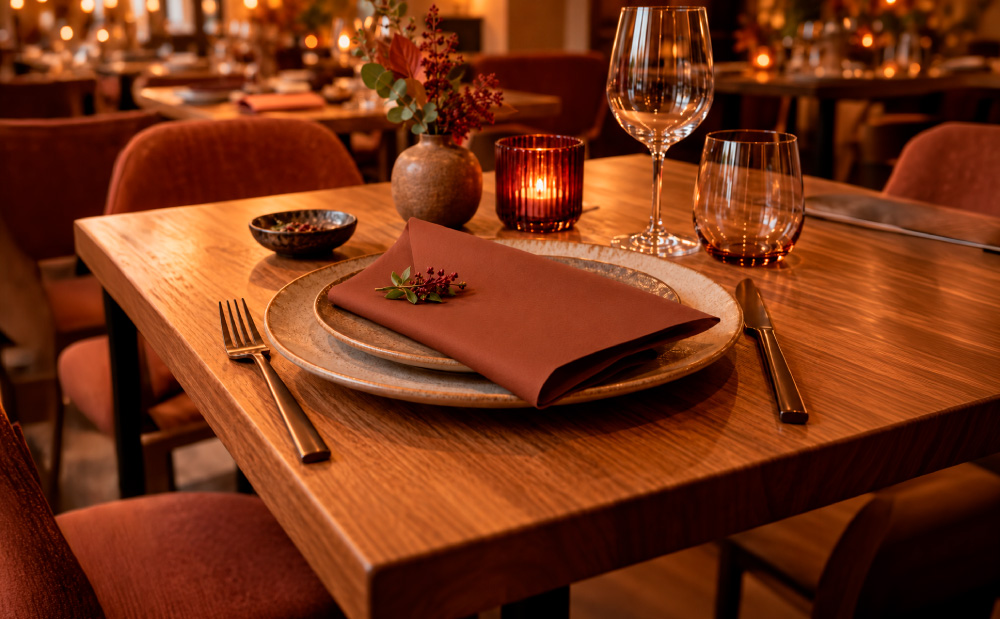
Earthy colors are evolving this season toward deeper, more sophisticated shades. Cocoa brown, terracotta, and burgundy hues are taking center stage, creating warm and elegant settings.

“Cocoa Powder”—one of the key colors identified by WGSN and Coloro for Autumn/Winter 2026/27—reflects this quest for earthy, natural tones with a strong connection to materials.

How can you bring this trend to your restaurant? Pair warm-toned napkins with neutral tablecloths, ceramic dinnerware, and wooden elements. The result is a balanced, inviting table with real character.

2.- Teal and contrasts: a touch of sophistication

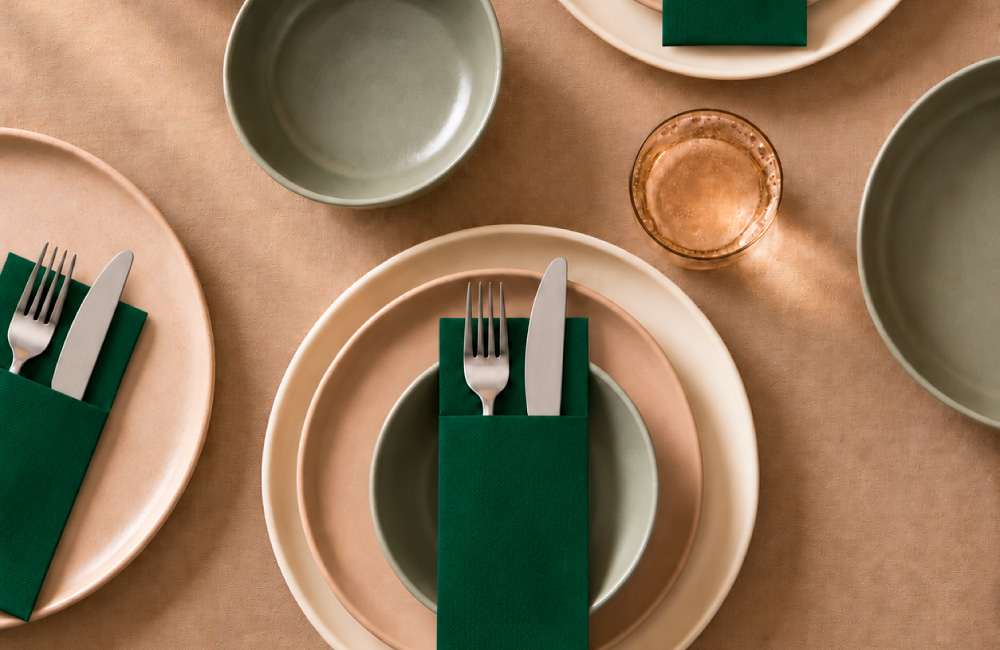
This season also makes room for colors with more character. Deep teal takes center stage. “Transformative Teal”—chosen as the 2026 Color of the Year by WGSN and Coloro and featured in their A/W 2026/27 palette—offers an alternative to traditional dark shades by combining depth with character.

Pairing it with beige, cream, or brown creates sophisticated contrasts without overwhelming the décor.

For the table, this trend can be incorporated through richly colored napkins paired with light-colored tablecloths and dinnerware featuring simple lines.

The key lies in choosing a standout color and complementing it with shades that provide balance.

3.- Textures that look and feel great

Texture has become an essential element of décor. It is no longer just about combining colors; it is about creating a visual and tactile experience that complements the culinary offering.

Textile-effect finishes, soft surfaces, and materials that evoke natural fibers allow you to dress the table with a sense of comfort and quality.

In this context, Airlaid napkins and tablecloths are an appealing choice for businesses seeking a polished presentation and a pleasant feel, combined with the practicality of single-use products.

A napkin with the right finish, a well-chosen tablecloth, or a contrasting table runner can transform a simple setup and give it more character.

If you would like to learn more about the characteristics of this material, discover why an increasing number of restaurants are choosing Airlaid for their table settings.

4.- The elegance of warm neutrals

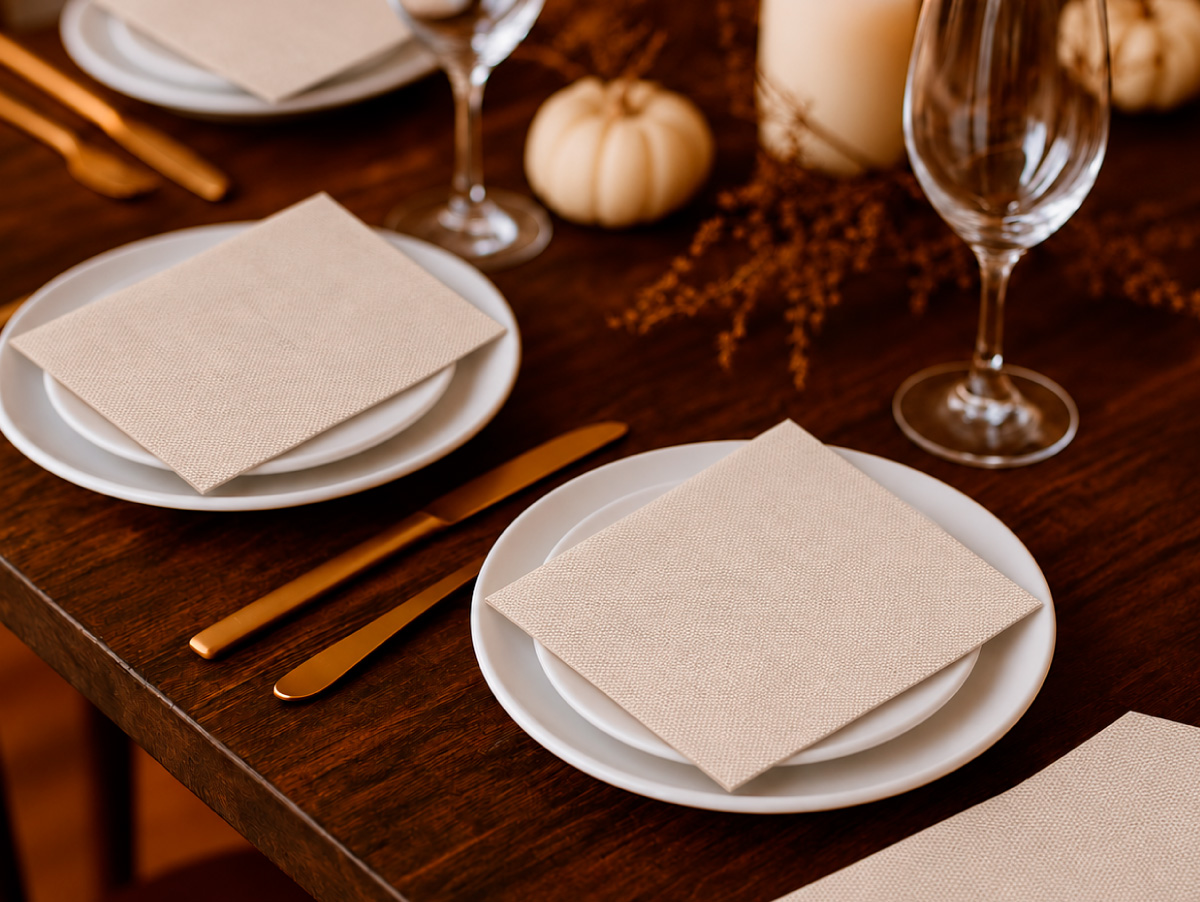
Light tones remain central but are evolving toward a warmer palette. Off-white, ivory, sand, and soft beige shades are gaining ground over cooler whites, creating relaxed and inviting atmospheres.

This trend is particularly appealing for restaurants seeking a timeless décor that is easily adaptable to different seasons.

A table set with a cream-colored tablecloth, earth-toned napkins, and handcrafted dinnerware can exude elegance without the need for excessive decorative elements.

Moreover, neutral colors make it easy to refresh the table’s look simply by swapping out the napkins or adding a seasonal table runner.

5.- Distinctive combinations of materials and colors

One of the most interesting ideas for this autumn-winter season is combining different finishes and shades to add depth to the table setting.

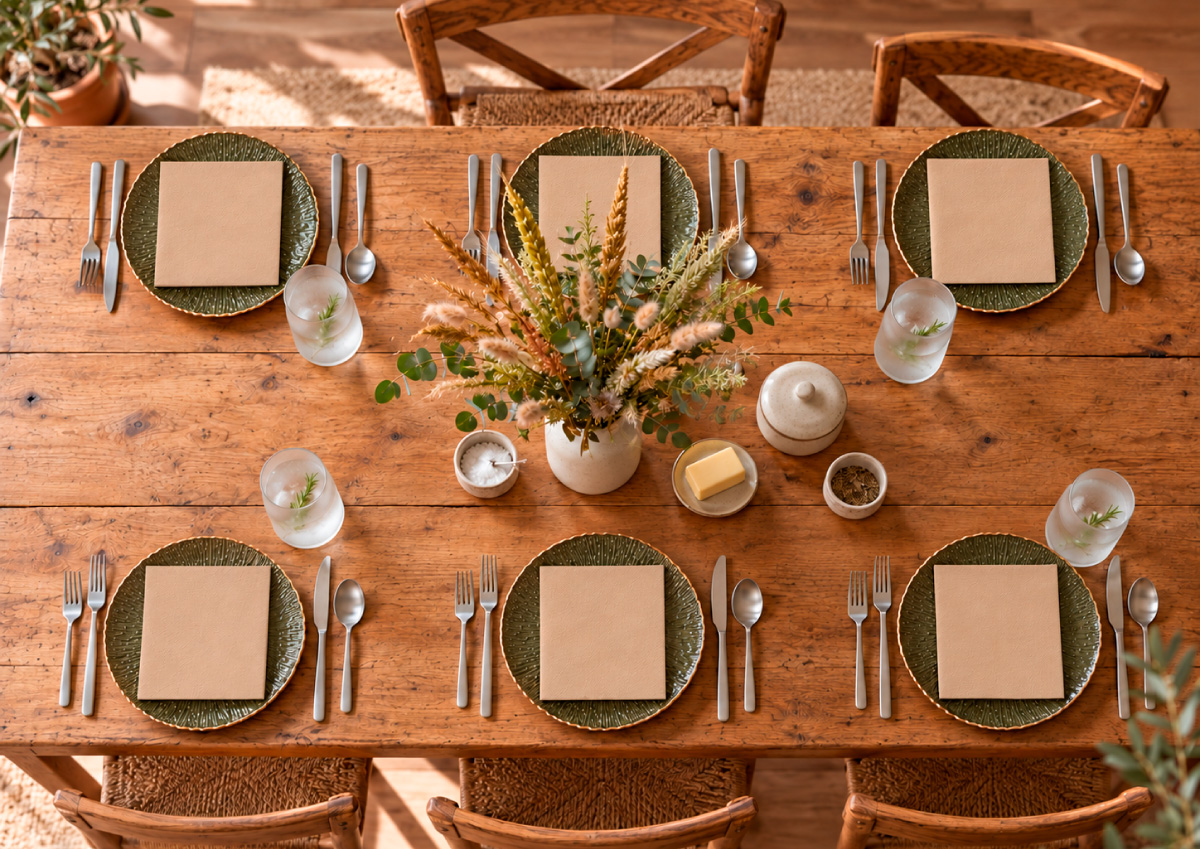
Wood, ceramics, glass, and materials with natural-looking textures blend with subtle metallic accents and organic-inspired decorative elements.

There is no need to use a multitude of materials; sometimes, simply combining a solid-colored tablecloth, a contrasting napkin, and distinctive dinnerware is enough.

Table runners and placemats also offer various decorative possibilities, particularly for establishments that wish to keep their tabletop surfaces visible.

6.- Tables with a distinct identity

Beyond mere trends, every restaurant has its own unique personality. The décor should complement the establishment’s style, its culinary offering, and the experience it aims to convey.

That is why personalization remains a key tool for standing out from the crowd.

Customized napkins, corporate color schemes, and exclusive designs help create a cohesive and recognizable image.

The goal is not to follow every trend, but to select those that best align with each business’s identity.

A trend works best when it aligns with the restaurant’s identity.

The Autumn/Winter 2026/27 season opens up new possibilities for playing with color, texture, and contrast in table settings.

From cocoa and burgundy tones to warm neutrals and blue-greens, trends can serve as inspiration to refresh your presentation without losing the establishment’s unique character.

The key lies not in adopting every trend, but in choosing those that best communicate the restaurant’s concept and the experience you wish to offer your customers.

At La Pajarita, you will find a range of napkins, tablecloths, table runners, and placemats designed to adapt your table settings to the season, combining style, functionality, and personality.

And if you would like to see how décor trends have evolved, you can also check out our article on table décor trends for Autumn/Winter 2025/26.

FAQs on Autumn/Winter 2026/27 Table Trends


Which colors will be trending for table settings this Autumn/Winter 2026/27?

Cocoa, terracotta, burgundy, blue-green, and warm neutral tones offer various possibilities for adapting the table to the season. The choice should always be based on the style and identity of each establishment.

How can a table setting be refreshed without changing the entire décor?

Swapping out elements such as napkins, table runners, or placemats allows for the introduction of new color and texture combinations while retaining existing furniture and dinnerware.

How should trending colors be combined in a restaurant setting?

A simple approach is to select a primary color and pair it with neutral or complementary tones that bring balance to the overall look.

How important is texture in a table setting?

Texture influences both visual perception and the tactile experience. The material’s relief, finish, and volume can alter the perception of both the color and the overall quality of the setting.

Comment


Privacy Overview

This website uses cookies so that we can provide you with the best user experience possible. Cookie information is stored in your browser and performs functions such as recognising you when you return to our website and helping our team to understand which sections of the website you find most interesting and useful.